Learning module libs
I did this project back in 2013 in my second year of apprenticeship, together with my friend Luca. We were in the middle of the second year and were pretty much finished with the topics for that year, so our instructor told us we can just so something productive for our own.
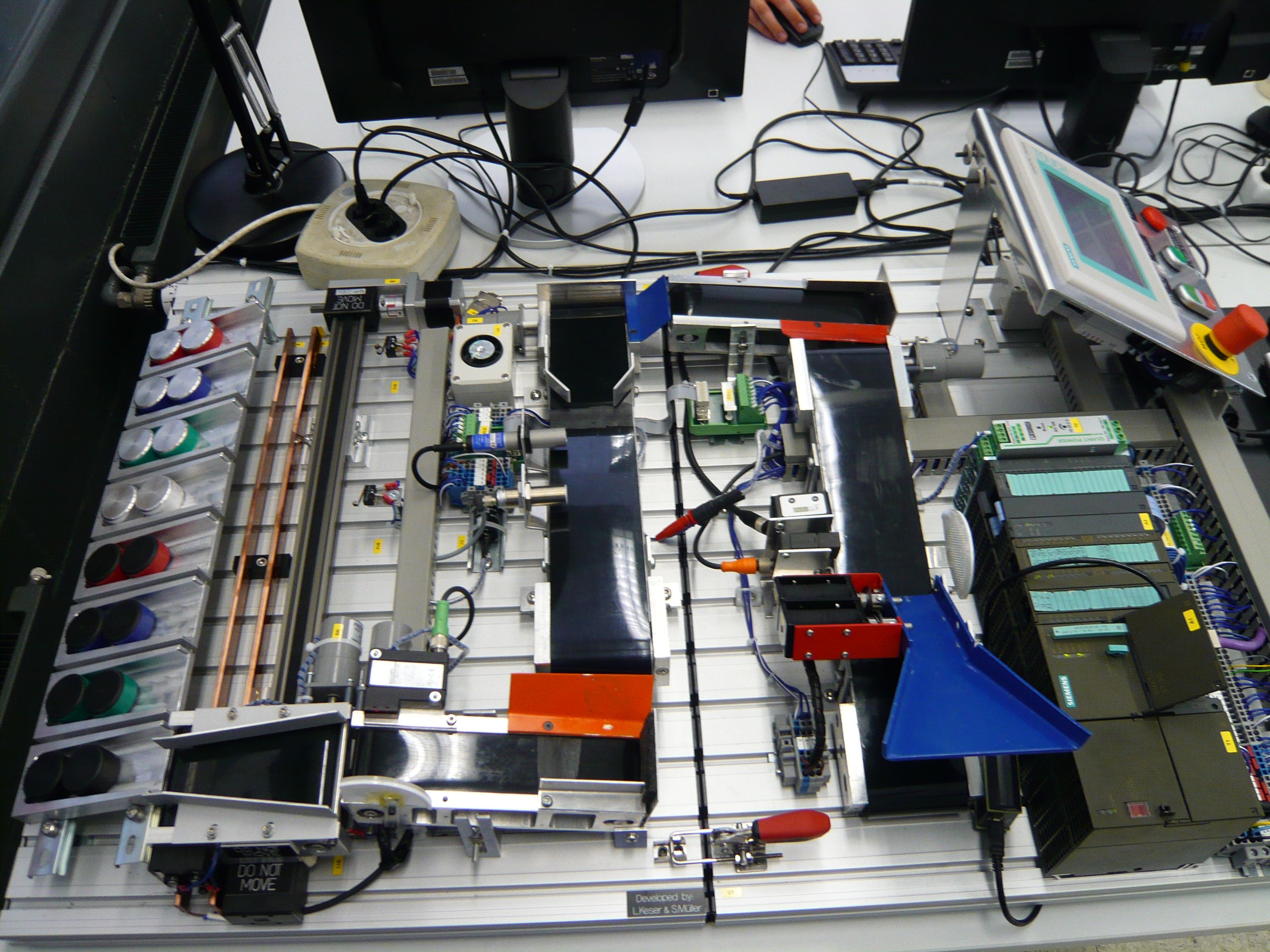
Basically, this represents a sorting facility. The goal was develop a learning module where other students could easily learn the concepts of automation and PLC. For this reason we also had to write the manuals and instructions on how to get startet. And we had to design everything in a way so that everybody can work with it. Even if you never before worked with the interface for stepper motors or programmed an touch interface.
You have a bunch of different parts, in either green, blue, red or without any color. Moreover the parts are made of two different materials, either aluminium or plastic. The unit will then check which part it is exactly and sort it in the corresponding bins.
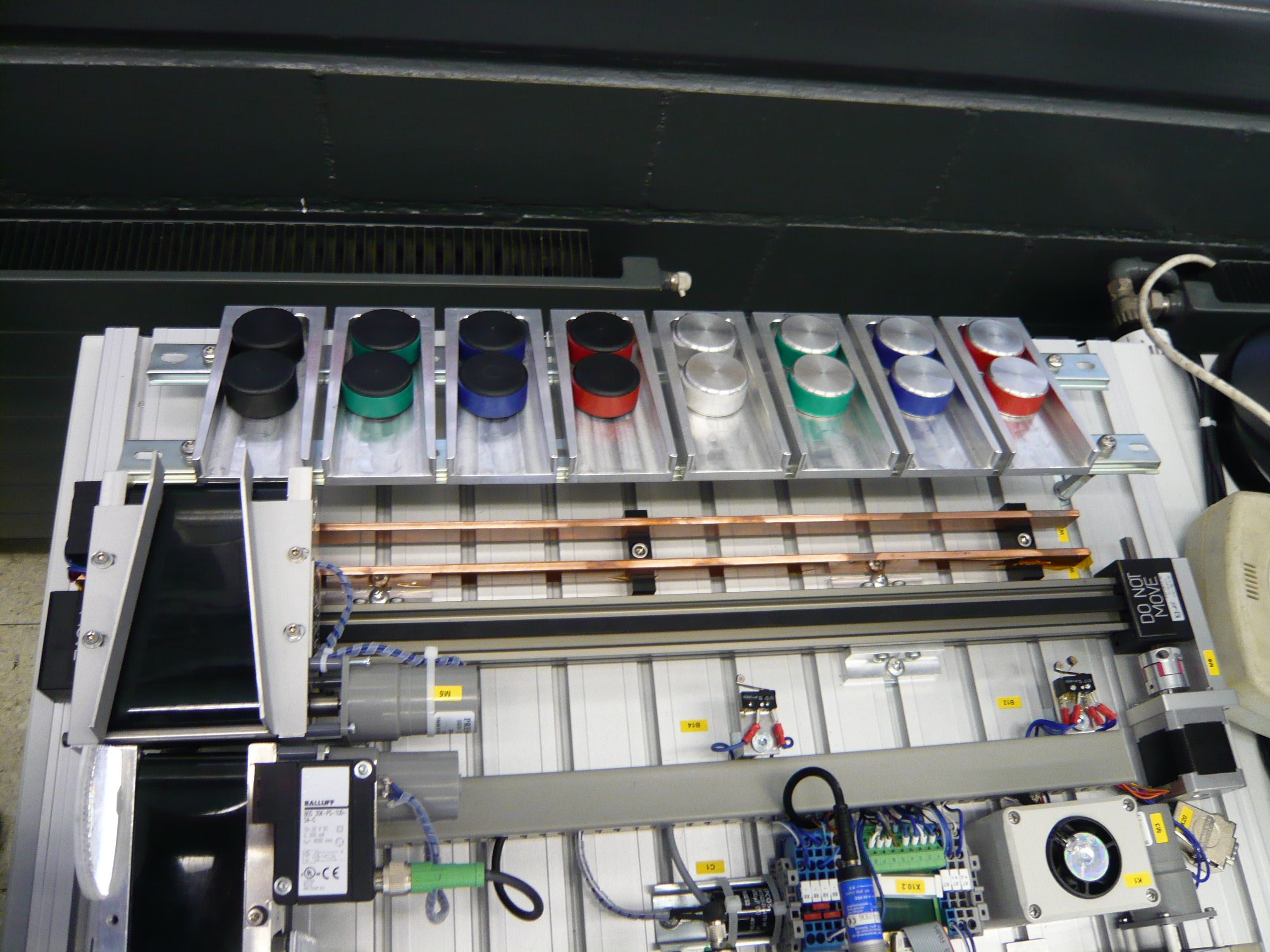
Overview
Separtation and part detection
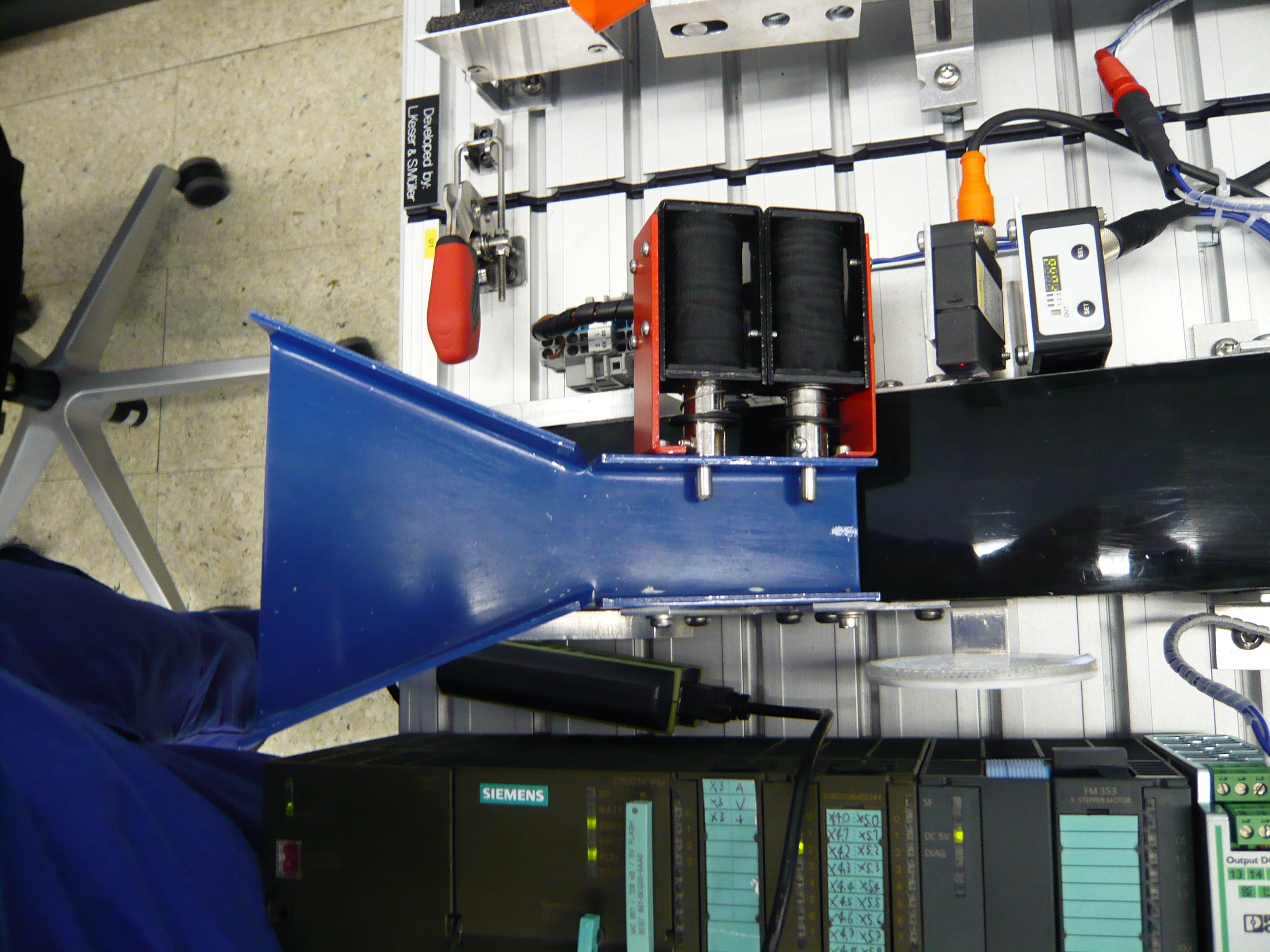
At the beginning, the parts are in the "funnel", whereby only one piece at a time will be released on the conveyor belt. This is achieved through the two electric hoisting magnets. First the front one opens and let one piece through and, then closes again. After a certain time, the upper one opens for a short time and let one piece into the intermediate area.

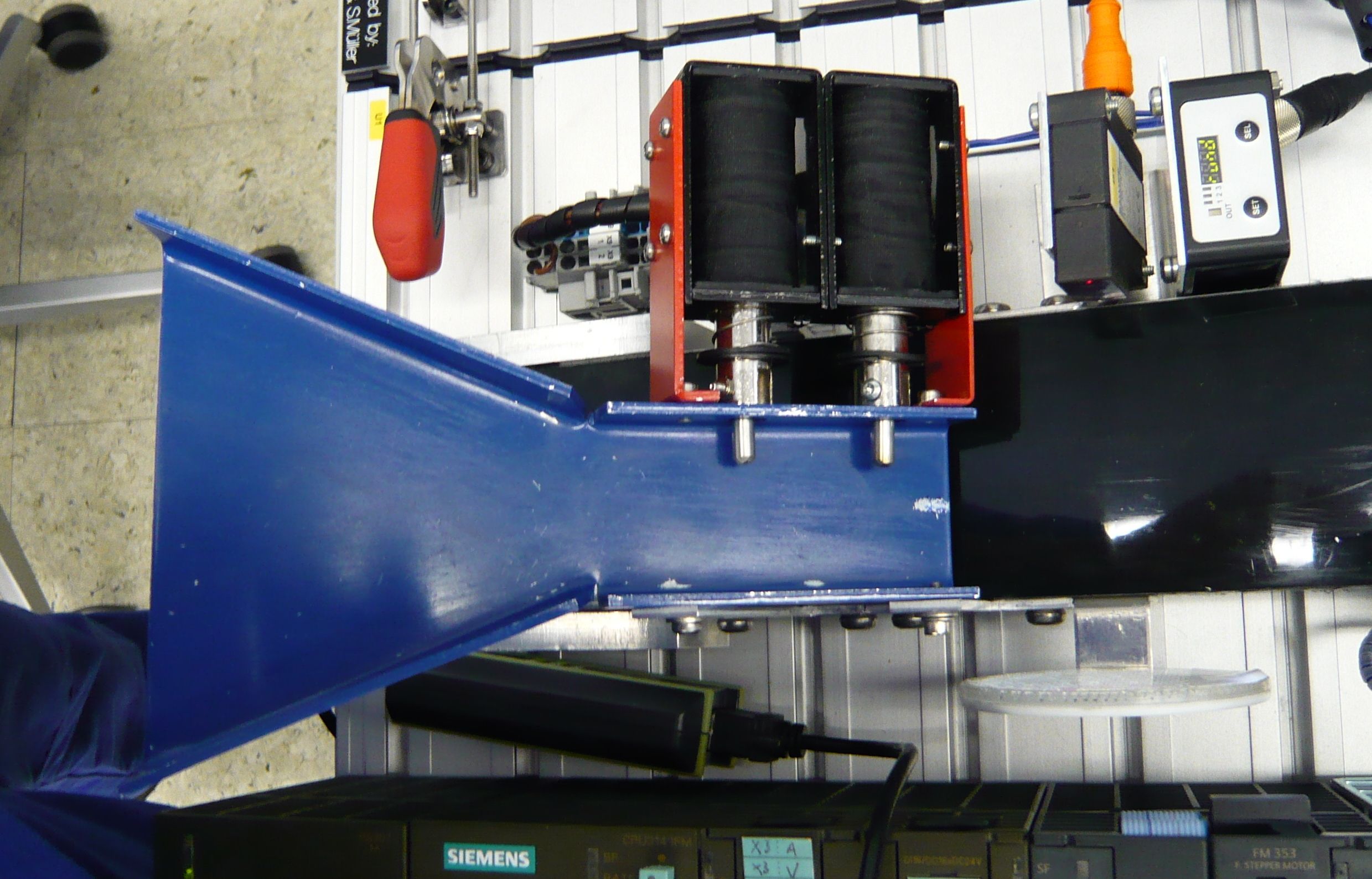
Immediately afterwards is a light barrier, which checks whether the part really came on the conveyor belt. This is followed by the color sensor, which transmits the color to the PLC. The sensor has one channel for each color. If the part has no color, then no channel is activated and therefore no signal is output. The sensor has a time delay so that the signal stays steady for at least 40 milliseconds and thus safely runs through a program cycle.
On the third conveyer belt, first the ultrasonic sensor checks for the part to be present. Then the capacitive sensor differentiates between plastic and aluminum.
Sorting
Now the system knows with which part it is dealing with. On the last convoyer belt, there is a light barrier to confirm there is a part. Subsequently, the part is transportet on the linear drive with which it is carried to the appropriate bin.

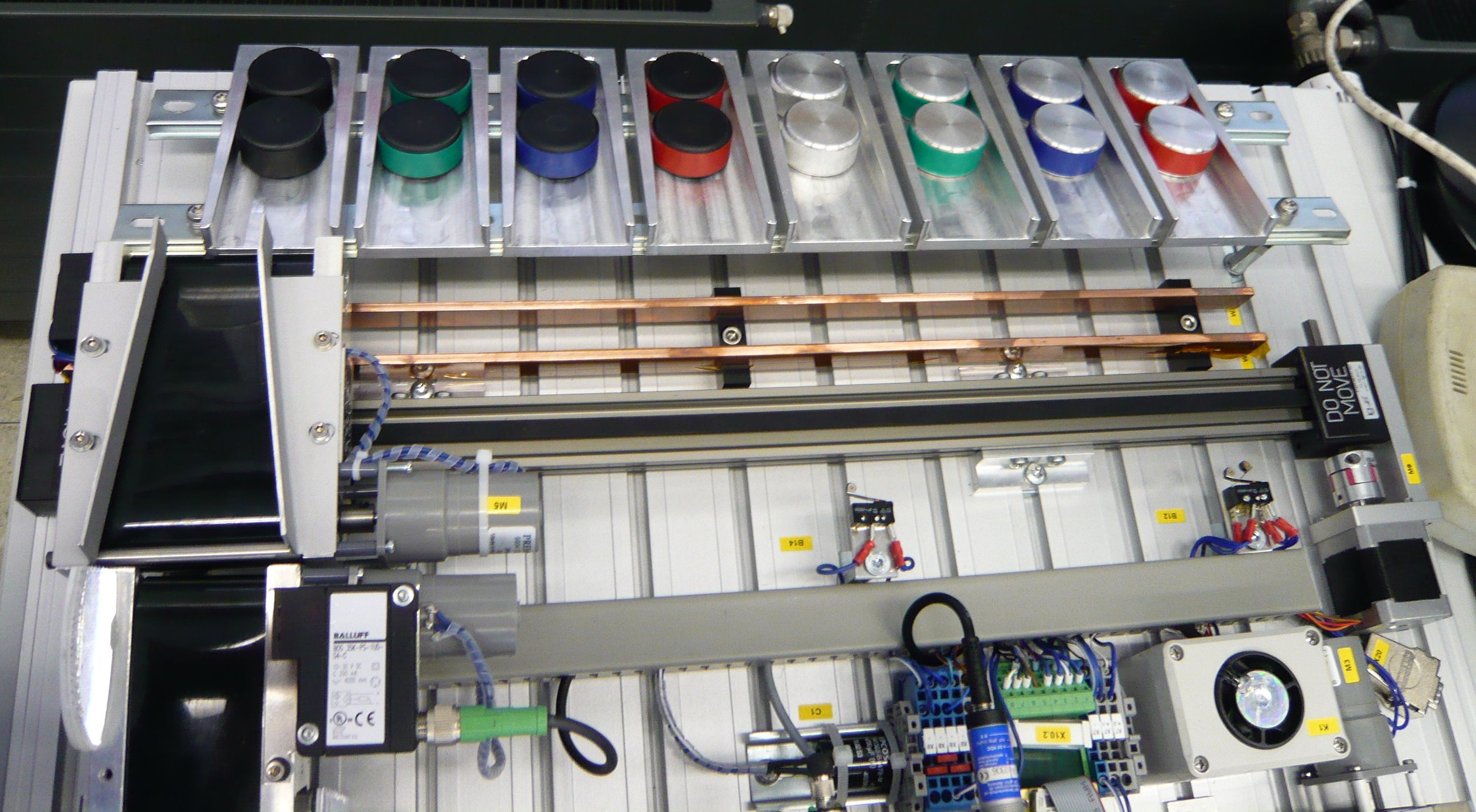
The linear drive consists of an linear guide driven by a stepper motor which power unit is controlled by a spectial modul on the PLC. To faciliate the control of the convoyer belt on the moving linear drive, we took two copper rails from which the cart can pickup the power.

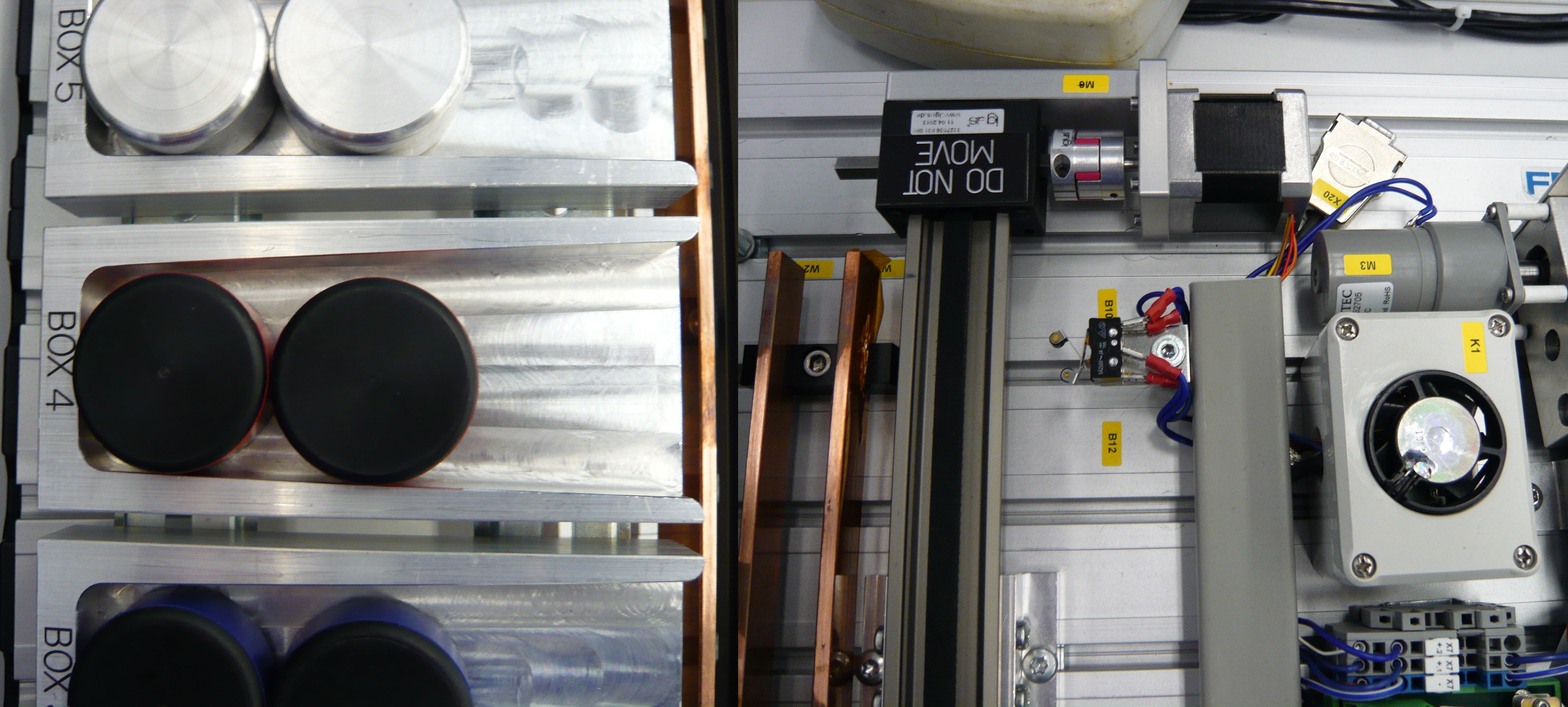
The bins were made on a CNC. We needed some time to figure out the right design but after that we could produce them pretty quickly.
Control unit
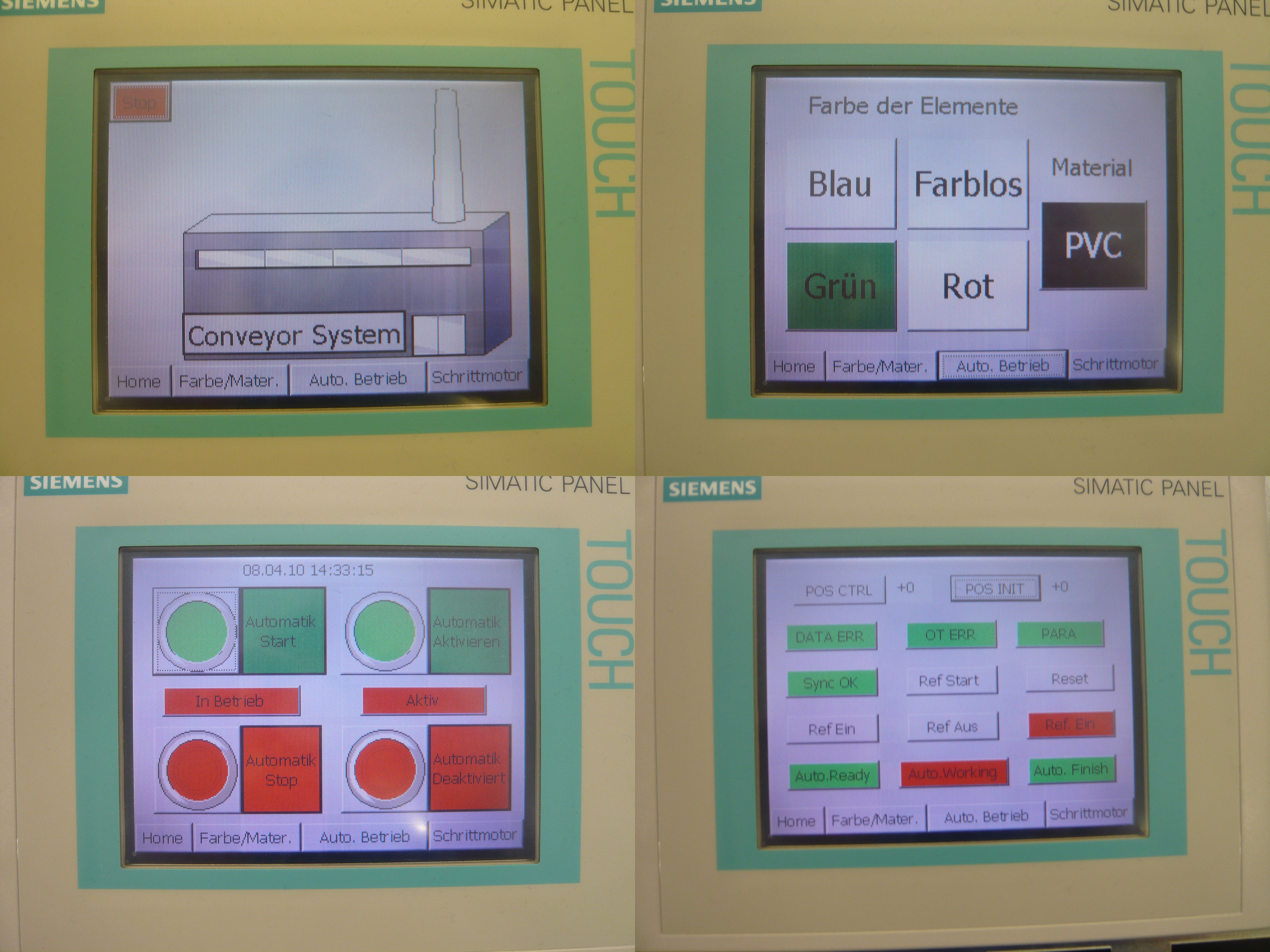
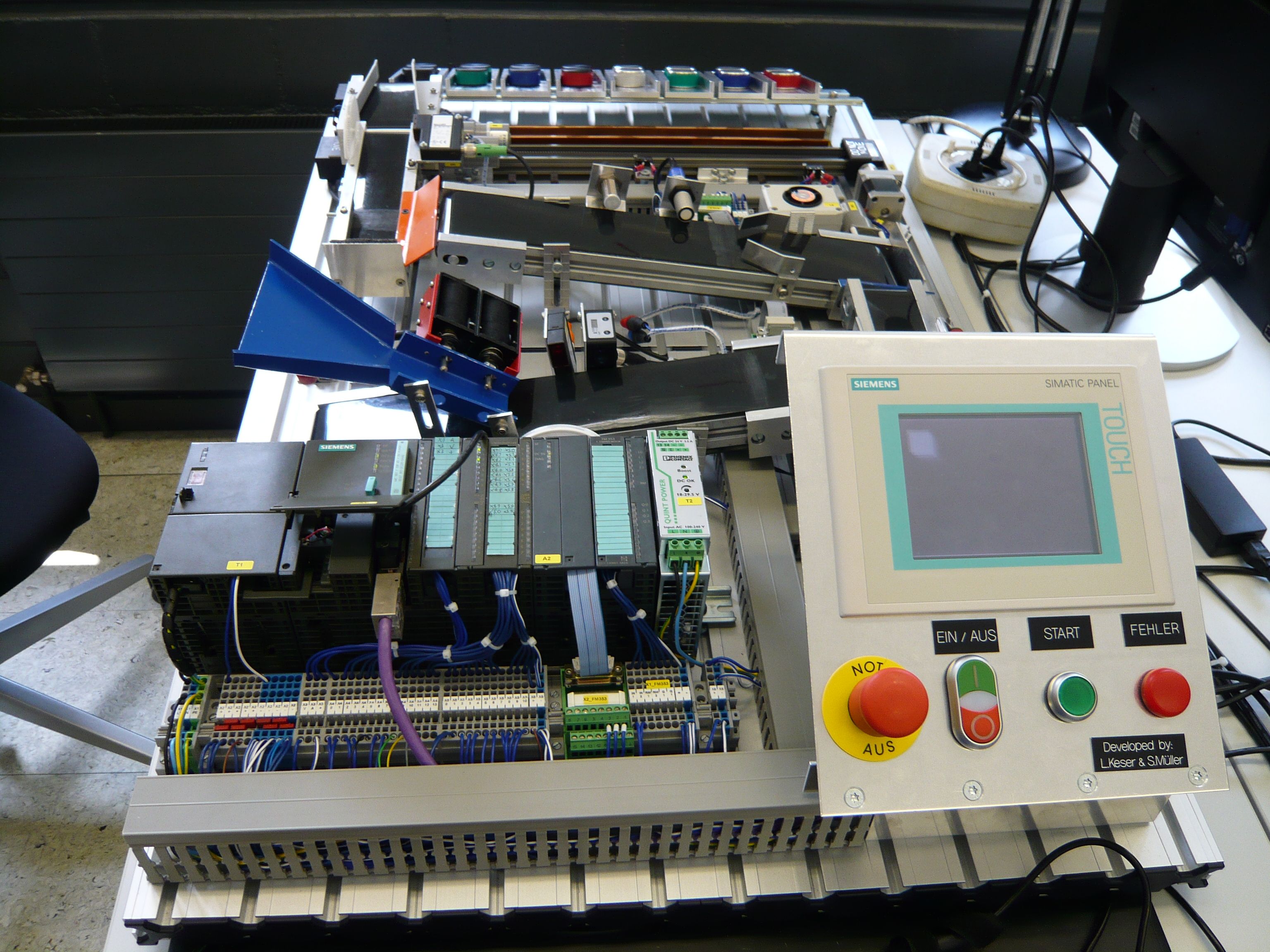
The control unit consists of an Siemens PLC S300 and an a corresponding Siemens Touchpanel. The only special thing was the control modul for the stepper motor because standard I/Os are not able to drive such a high clock frequency.

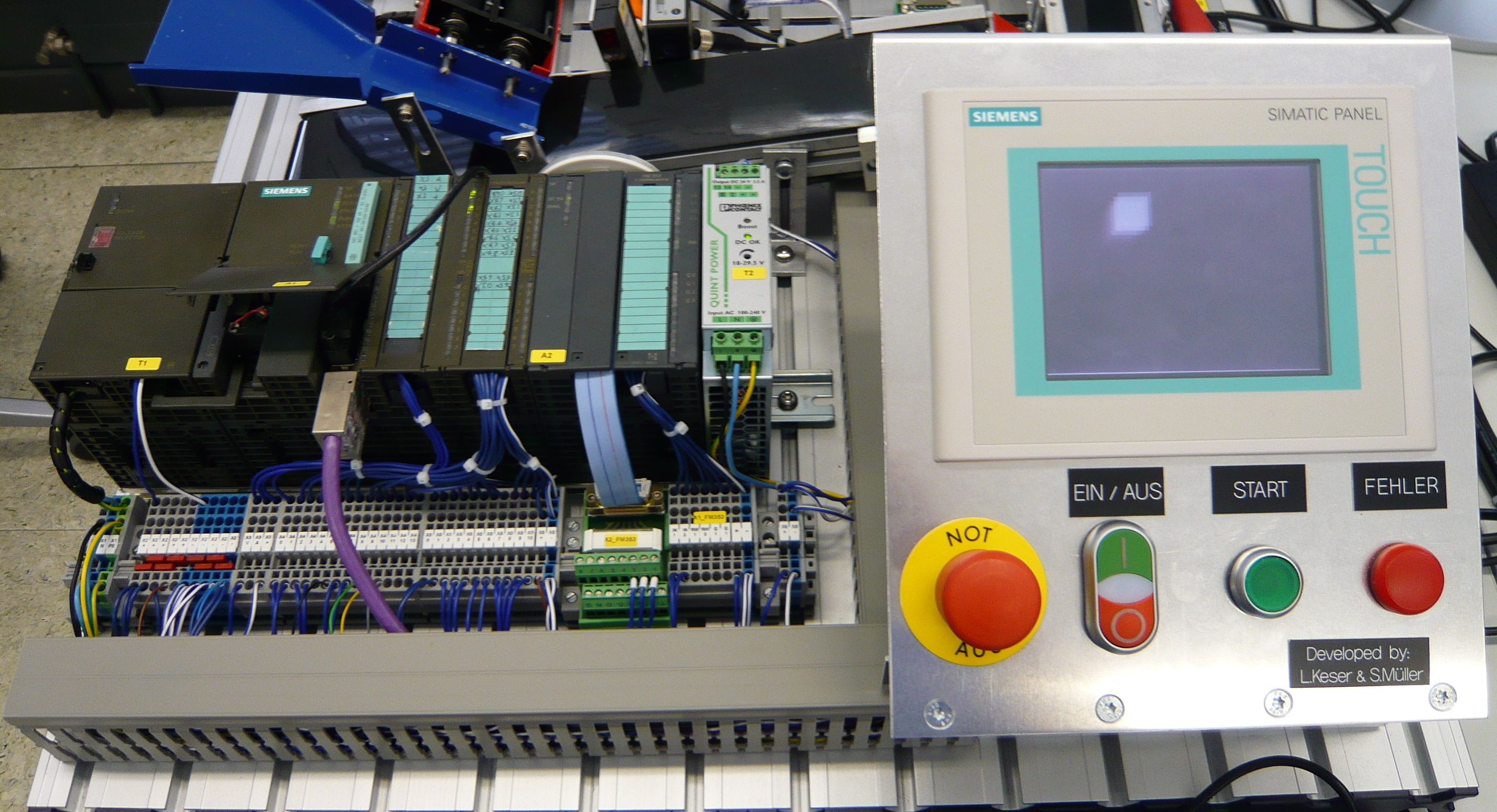
With the touch panel you could then control the complete system. You could do the setup and monitoring of the stepper motor and could start the automatic mode where the system just does its thing sorting one piece after another until there are no more left. The interface also displays the detected color and material.